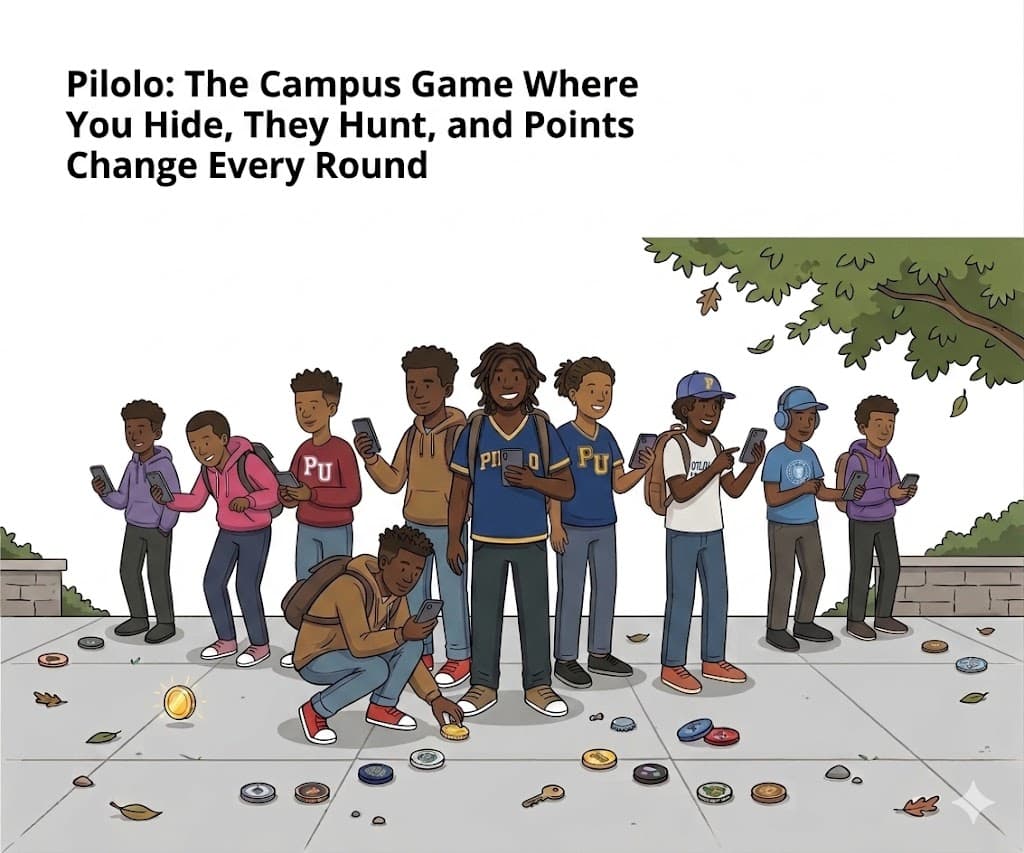
Your Campus Is Already a Game Board. Here's How SpendByte Turns It Into One
The footpaths, buildings, and landmarks were already there. SpendByte just puts them on a map, attaches challenges to each one, and rewards you for showing up in person. Next time you walk to class, look around. That bench, that mural, that corner of the quad might already be a treasure. The game board was under your feet the whole time.
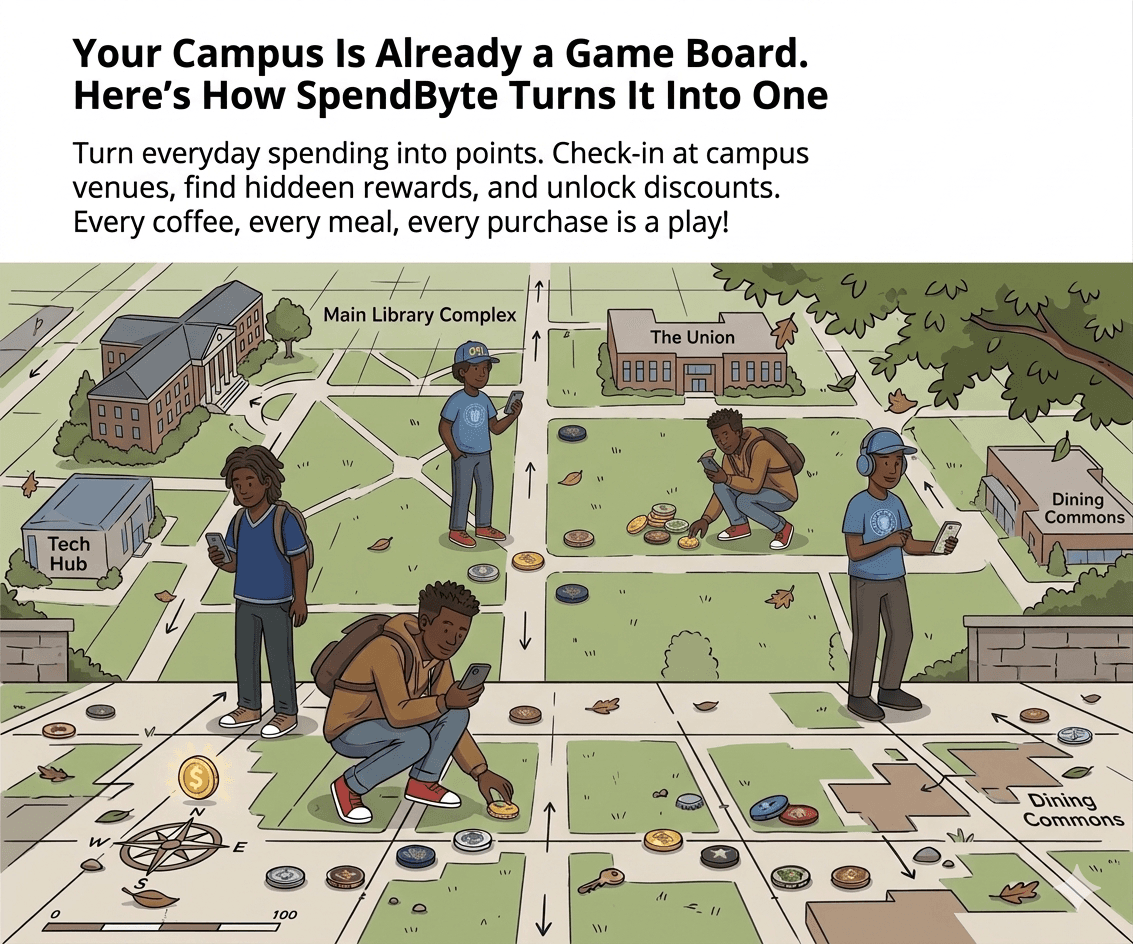
Walk across your university campus and you're moving through a world full of landmarks: the main gate, the library steps, the statue everyone meets at, the café that never has a short queue. Students already use these places as reference points. SpendByte treats them as something more: checkpoints on a live game board.
Open the Hunt tab and your university campus stops being background scenery. It becomes a map dotted with treasures, clues, and rewards waiting to be claimed.
The map is the starting point
Every hunt campaign in SpendByte is built around real locations on your university campus. Each step in a campaign is tied to a treasure marker somewhere you can actually walk to. Your job is to find it.
The Hunt map shows you where to go. Tap a treasure and you'll see a clue, a reward amount, and what's standing between you and the next step. Some markers are active and ready. Others stay locked until you finish what came before.
As you complete steps, your progress builds into a trail across your university campus. You're not just collecting points. You're literally walking a route through places you pass every day, now with a purpose.
Find it. Scan it. Prove you were there.
Getting close isn't enough. SpendByte uses your phone's camera to verify you're at the right spot.
Point your camera at the treasure marker and the app confirms the match on the spot. No typing in a code. No hunting for a sticker in the wrong corner. You found the place, you scanned it, you earned it.
In some campaigns, you can even scan first and discover which step you've reached. Walk around your university campus, point your camera, and let the app tell you which treasure you've stumbled onto. It flips the usual flow: explore first, then figure out where you are in the campaign.
Every stop has a challenge
A treasure marker is rarely the whole story. Each step can come with one or more tasks, required or optional, that you complete in order to move on.
SpendByte packs a lot of variety into those tasks:
Exploration
- Scan treasure markers to verify your location
Media
- Watch a video or listen to audio until you hit the threshold
- Recreate a reference photo, video, or sound with your own camera or mic
Knowledge
- Answer trivia (single choice, multiple choice, or free text)
- Find and submit a book quote
Puzzles
- Solve a jigsaw, tilt maze, connect-the-dots, or tangram
Commerce and social
- Make a purchase at a participating merchant
- Refer a friend
- Post on social media as instructed
A single hunt step might ask you to scan a statue, watch a 30-second clip about your university campus history, and answer a question about it. The next might be a puzzle you solve on a bench between classes. The layout of your university campus stays the same. The experience changes at every stop.
Campaigns, steps, and the path to the finish
Hunt campaigns are structured as sequences of steps, each with its own reward. Finish a step and you collect points. Finish every step and you complete the campaign.
Some campaigns run on a fixed order: step one unlocks step two, and so on. Others let you move more freely across the board. Either way, the app tracks what you've done, what's still active, and what's locked.
You'll see your progress in the step carousel and on the map itself. Treasures you've cleared show as found. The next one pulses with possibility.
Campaigns also run on a schedule. They have a start and an end, so there's a window to play. That keeps hunts feeling like events, not endless chores.
Some hunts are a team sport
Not every campaign is solo. Group hunts assign steps across a team, so you're coordinating with friends rather than racing them to every marker.
Join or create a group, get your assignments, and work through the campaign together. One person might be responsible for a media task while another handles the scan at a different landmark. Group chat keeps everyone aligned.
It's the difference between wandering your university campus alone with a map and running a small squad through a shared mission.
Pilolo: when your university campus becomes the arena
SpendByte doesn't only run structured treasure campaigns. Pilolo turns your university campus into a live hide-and-seek game: hiders stash a treasure inside a zone, seekers hunt it down with the map and camera, and roles flip every round.
Same university campus. Different mode. Same app.
If treasure campaigns are a guided tour with rewards at every stop, Pilolo is the free-for-all happening in the spaces between.
Points that go somewhere
The points you earn on a hunt aren't just leaderboard decoration. They feed into SpendByte's wider campus economy: your SB balance, marketplace checkout, merchant rewards, and more.
Complete a step near the student centre and the points might buy lunch at a participating shop later that week. Refer a friend as part of a task and everyone benefits. The game board connects to real life on your university campus, not just screen time.
How to start playing
If there's an active hunt on your university campus:
- Open SpendByte
- Go to the Hunt tab
- Choose your hunt from the campaign picker
- Follow the map to your first active treasure
- Scan the marker, complete the tasks, and collect your reward
- Repeat until the campaign is yours
Check Game Rules in the app for a full breakdown of hunt steps, task types, and Pilolo rules.